A feature from Nadja
- Direct to:
- Materials
- Techniques
- Inspiration
A little excursion before we get started:
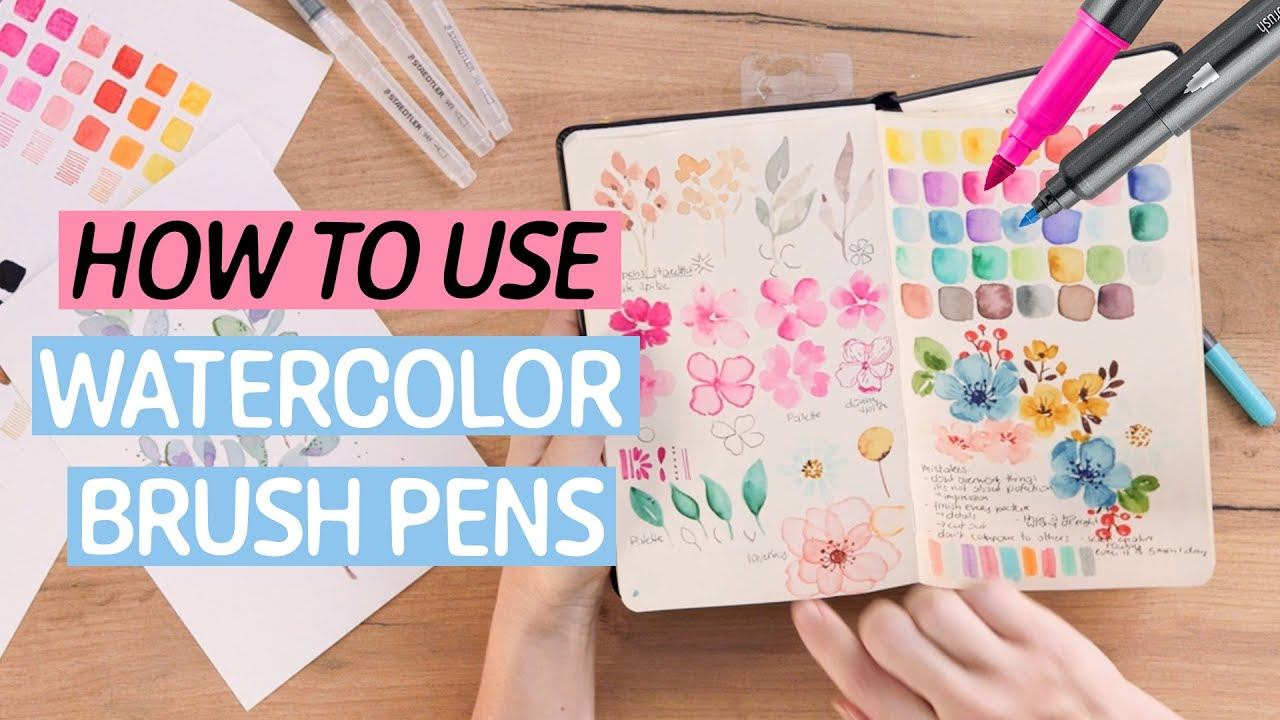
Watercolor brush pens belong to the category of felt-tip pens. While felt-tip pens are usually equipped with a classic round tip, brush pens - as the name already suggests - are equipped with a brush-like tip that creates thinner or thicker strokes through the use of pressure. Our water-colorable double-fibre brush-tip pens offer the further advantage of an additional fine tip that allows for a perfect interplay of curved lines and fine details. With this type of watercolor pen, you can create the following when painting:
- A rich color application
- Beautiful letters
- Curved lettering
- Fine details
Since the ink of the watercolor brush pens is water-colorable, you can even use them for watercolor painting. You can find out exactly how this works on this course.
The materials you need
Tip:
If you use the brush pens for watercolor painting, you should use watercolor paper with a higher weight and thus a good water absorption. Mixed media papers or watercolor papers with little structure are best suited for this purpose.
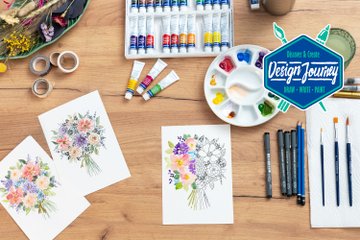
Here is an overview of all the materials you need for this course:
- Watercolor paper with little structure and high weight
- Watercolor double-ended fibre-tip pens with brush tip
- Paint brush or water brush
- Cup with water
- Mixing palette (e.g. laminated paper)
- Paper towel
How to use watercolor brush pens correctly
Watercolor brush pens or brush pens are also used like normal felt pens or fine liners, for example, in lettering. They have very versatile uses:
- Use the tip to draw many strokes close together or overlap them.
- Color larger areas with the brush pens and create interesting structures with them.
- Use the so-called "stippling" technique, in which you create whole shapes from many small dots by dabbing and quick movements.
There are many different ways to get creative with the brush pens in watercolor painting. In the video below, our artist Nadja explains the differences between the individual techniques and how to use them correctly.
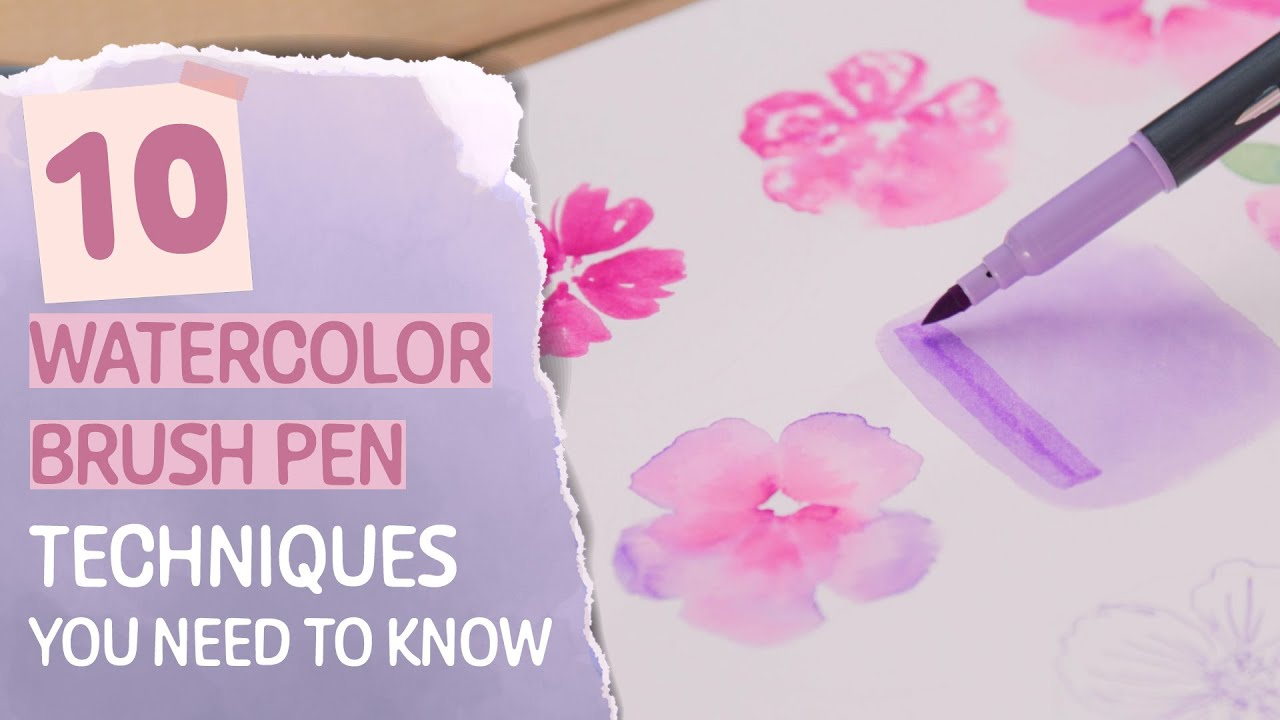
Our guide: 10 techniques for watercolor painting with brush pens
Here you can download the exercise sheet for the techniques used in the video:
#1: Dry-on-dry
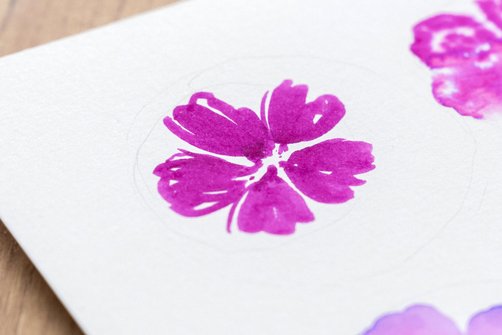
With the dry-on-dry technique, you draw the motif by using the brush pen like a conventional felt-tip pen or fineliner. Draw with the brush pens directly on dry paper without water coloring the colors afterwards.
#2: Dry-on-wet
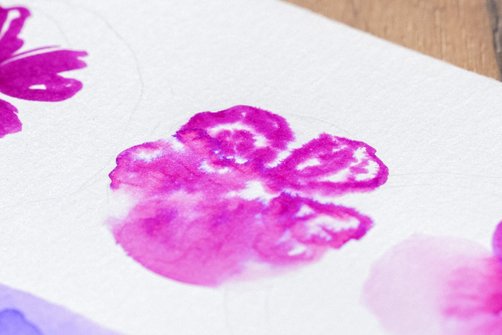
As with painting with watercolor paints and pencils, you can also paint with brush pens on moistened watercolor paper. The pigments then move with the water across the paper, which can create beautiful soft lines, patterns, and effects. However, it also means giving up some control over your artwork. If you have wet the paper too much, simply "soak" it up with a dry brush.
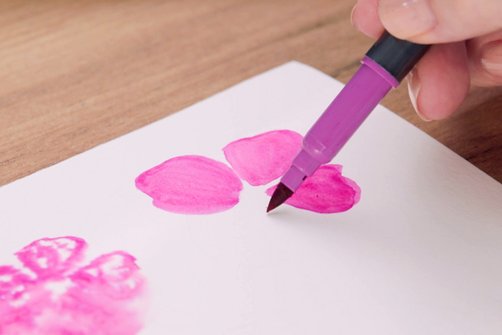
#3: Flat wash
The flat wash technique involves spreading the color evenly over the surface. To do this, color the desired area as evenly as possible with the brush tip of the double-ended brush pen before you loosen the ink with a wet brush or water brush and paint it.
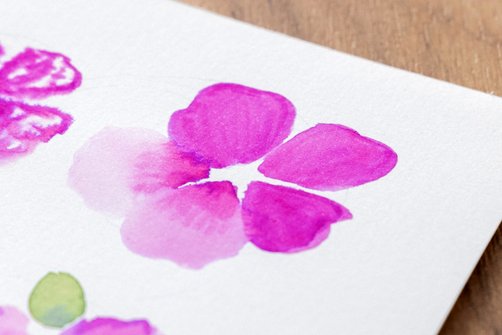
#4: Gradient wash
If you want to paint the color from dark to light, use the gradient wash technique. Color only the base of the motif with the pen and dissolve the color with water. Now use the brush to paint it from the inside to the outside, so that a color gradient from dark to light is created.
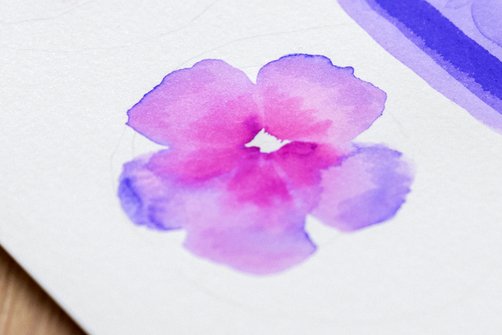
#5: Color gradients
Color gradients are always a special highlight in your watercolor motifs. Watercolor brush pens make it easy to create beautiful gradients. First apply the different colors with the brush pens and then dissolve them with a moistened brush or water brush to paint them. Make sure that you leave some space between the different colors on the paper so that they can blend in nicely.
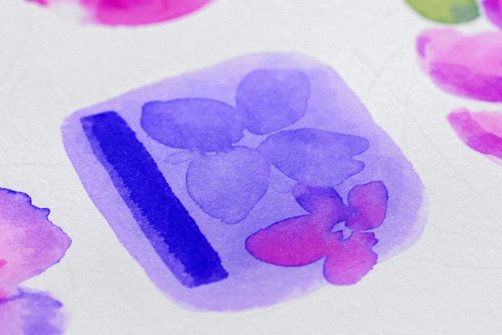
#6: Layering
For this technique you need to be patient, as each layer of ink has to dry before you can apply the next one. Always start with the largest area. Once this has dried, you can gradually apply more layers in other colors or an additional layer in the same color to intensify individual areas and create depth in your painting.
#7: Mixing colors
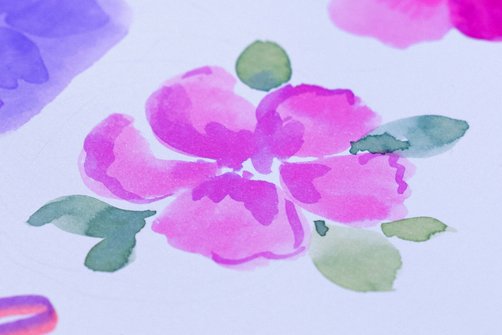
You can also mix colors yourself with watercolor brush pens, as with normal watercolors. For this you need a palette with a water-repellent surface (for example, laminated paper). Apply different colors of the brush pens in a separate small area on the palette. Next, mix the applied colors with a paint brush or water brush, pick up the color from the palette and transfer it to your paper. This way you can easily create your own individual color tones.
#8: Paint application with fine tip
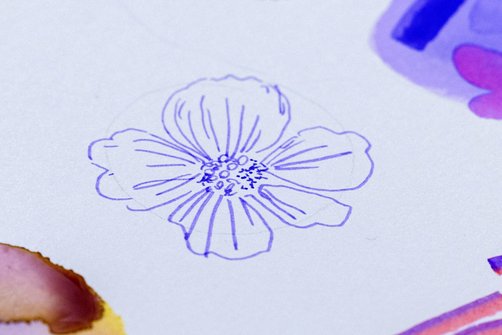
Use the thin tip of your water-colorable double-ended brush pens for this purpose. This way you can easily draw very fine outlines or filigree details in your pictures.
#9: Tip-to-tip blending
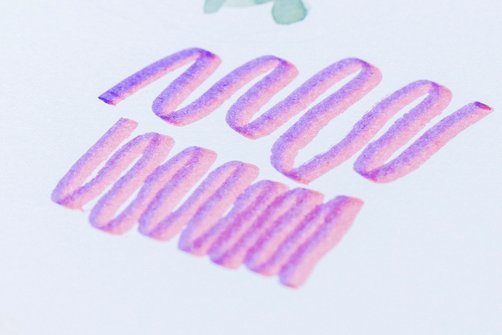
Tip-to-tip blending is when you use brush pens in two different colors. Here you transfer some ink with the tip of the darker pen to the tip of the lighter pen. If you now draw with the lighter color on the watercolor paper, you can clearly see both colors blending into each other. Don't worry, you won't ruin your watercolor brush pens with this technique! As soon as you have drawn a few strokes, you will notice that the color applied with the other pen becomes less and eventually disappears again.
#10: Textures with mixing palette
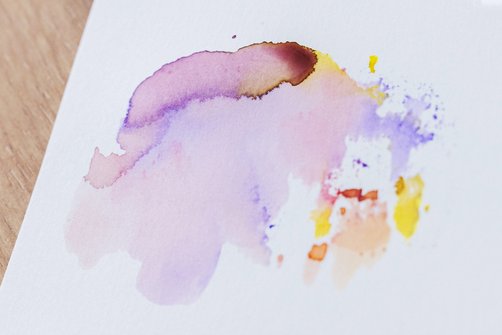
For this you need your palette or laminated paper again. Apply different colors to the surface and let a few drops of water fall onto the paper. You can then move the paper back and forth a little and let the colors run on the palette. Then press the painted side of the palette onto your watercolor paper. With this technique you have less control over how the color gradients look in the end. However, it is ideal for creating multi-colored backgrounds.
Create your own watercolor with brush pens
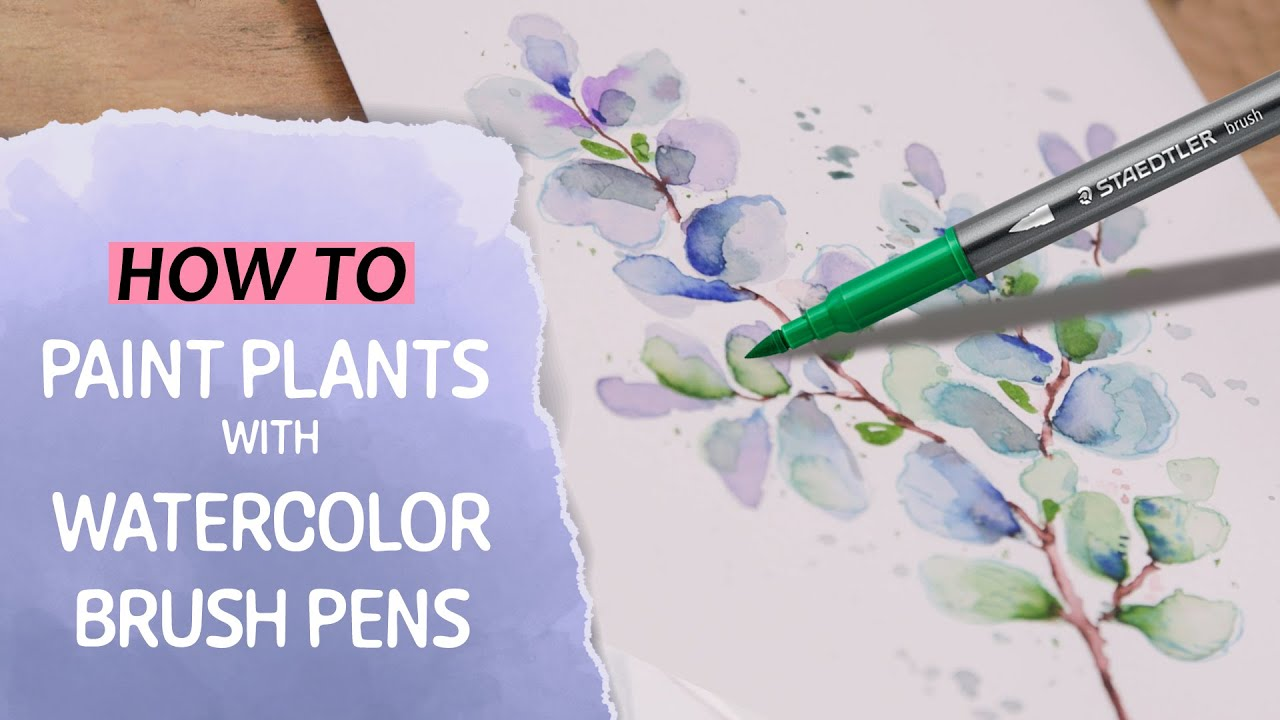
Don't hesitate and apply what you have learned directly! In the motif video, Nadja shows you how to create a delicate eucalyptus branch in a watercolor look using a combination of techniques.
And to make the whole thing a little easier, we have prepared a free template for you to download.
Not sure how to transfer the pattern onto the watercolor paper correctly? Nadja explains the individual steps in more detail in the video on our watercolor painting page.
Want more inspiration?
Check out the creations of other watercolor fans! Once you've created your first painting, link to us on social media with the hashtag #myDesignJourney!
These products are used


Other materials needed:
- Watercolor paper
- Mixing palette (e.g. laminated paper)
- Water container with water