How to sketch a glass
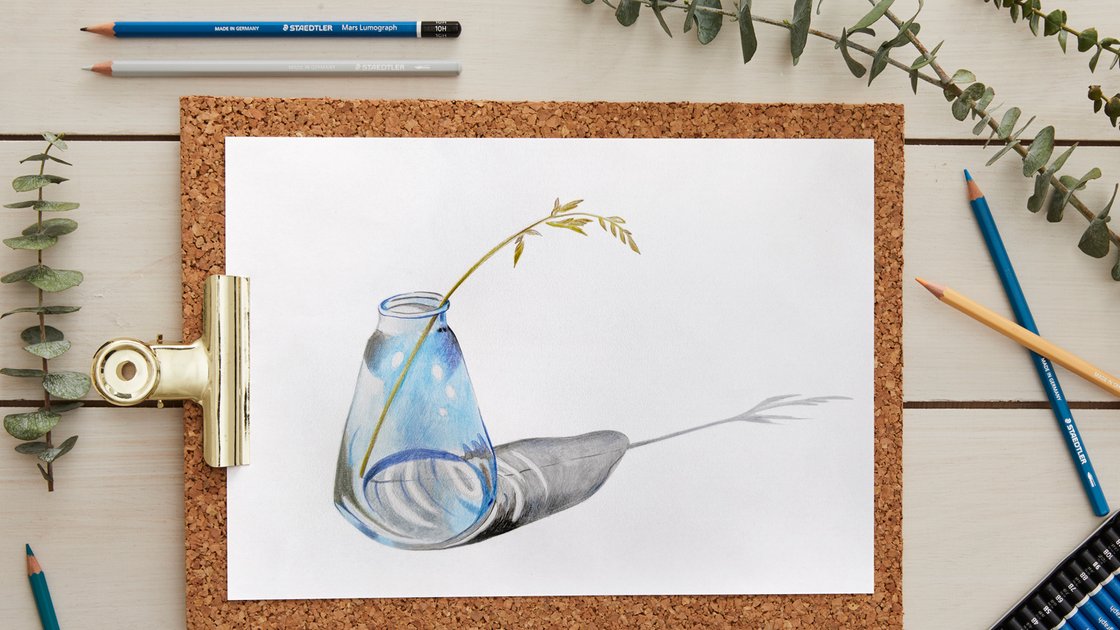
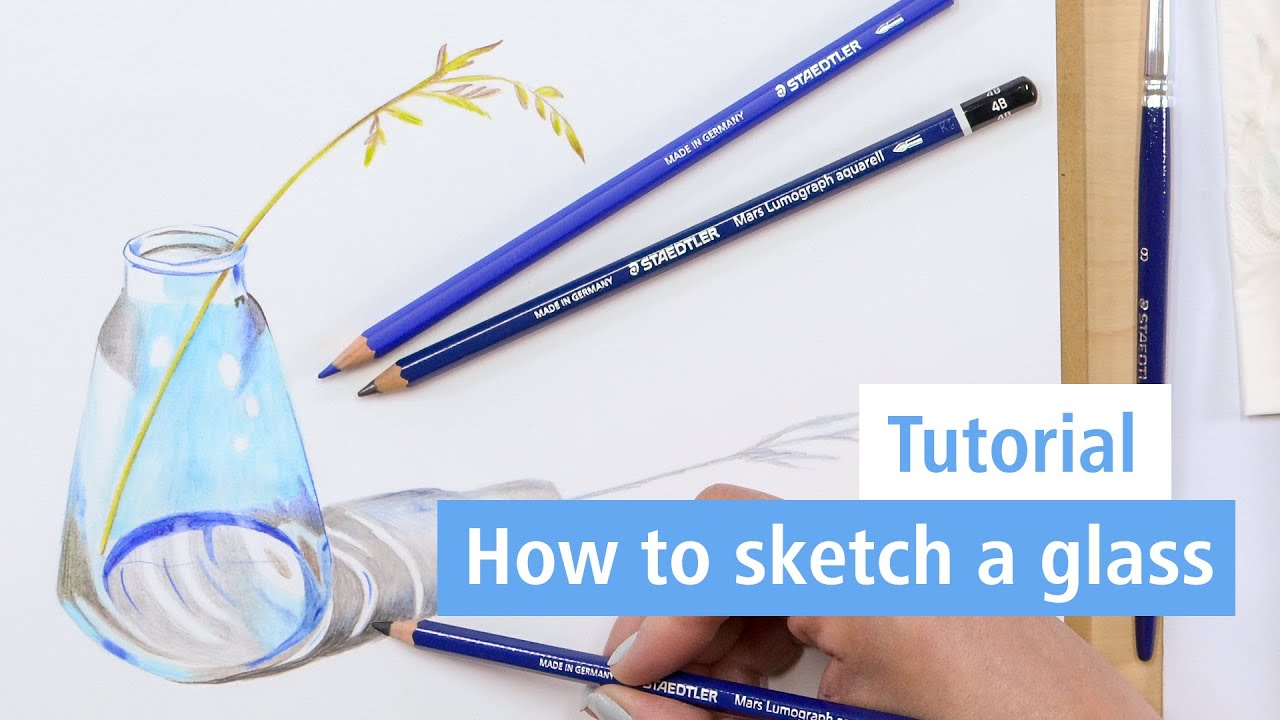
Drawing on glass is a game with colour spots, contrasts, spontaneous colour gradients, expressive lines and hatching. Colour gradients are created by applying different pressure to the pencils. The watercolouring and subsequent reworking of these areas creates an almost painterly impression.

An article by Claudia
- Direct to:
- Tutorial video
- Material overview
- Step-by-step tutorial
Tutorial video
Material overview
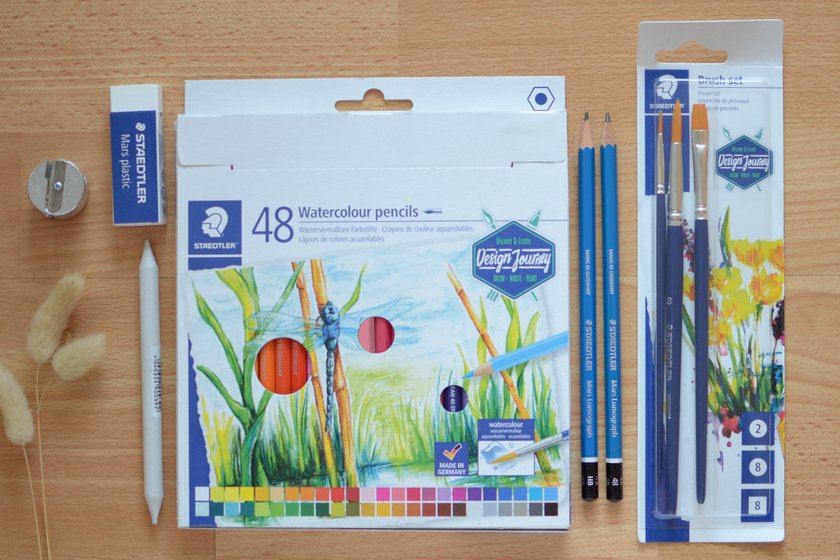
What you need
| Product | Article no. | Quantity |
|---|---|---|
| Mars® Lumograph® 100 Drawing pencil - Single product 5B | 100-5B | 1 |
| STAEDTLER® 989 Synthetic brush - Blistercard containing 3 brushes: #2 round, #8 round, #8 flat | 989-SBK3-3 | 1 |
| Mars® Lumograph® aquarell 100A Watercolour drawing pencil - Single product 4B | 100A-4B | 1 |
Additionally required:
Paper (A4), Water container
Tips:
- Practise watercolouring with the pencils on a test sheet first until you are confident in using them.
- Place a piece of paper under the palm of your hand so that the drawing does not smudge when you draw.
Step-by-step tutorial
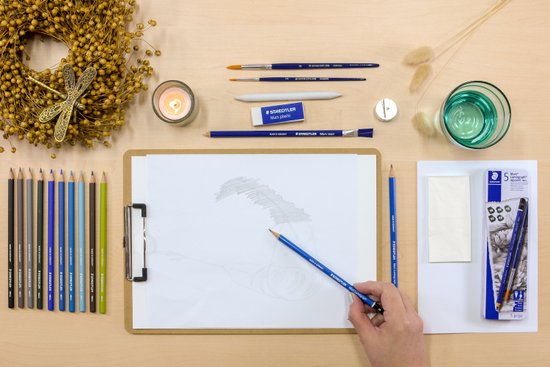
To make the motif a success, print out the motif template. Hatch the back of the template motif evenly with a very soft pencil (Mars Lumograph, 5B). The softer the pencil, the better this technique works.
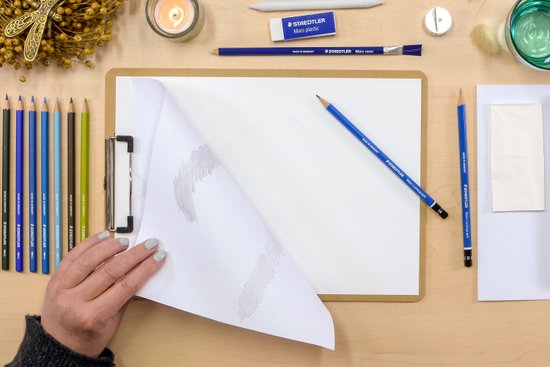
Place the template (with the front side still up) accurately onto the drawing paper. Then trace the motif with a hard pencil (Mars Lumograph, HB). This transfers the motif onto the paper. Before you remove the template, fold up the top corners and check that all the lines have been transferred.
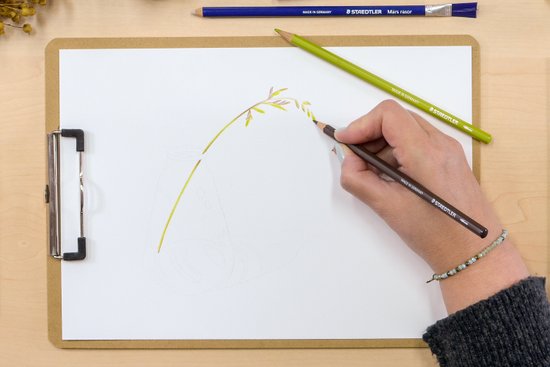
First draw the grass in light green. Interrupt the line of the stalk at the opening of the vase. Shade the seeds with dark brown to make everything look more three-dimensional.
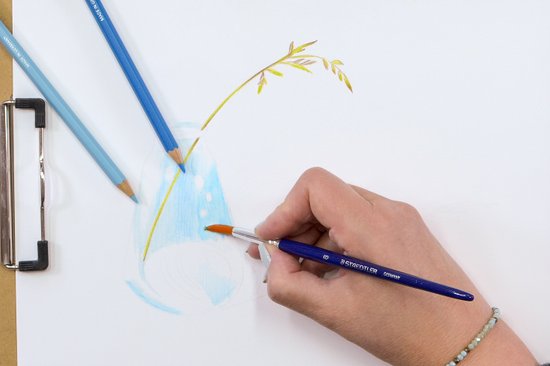
Create the back of the vase with shades of turquoise. Also remove white areas for the light reflections. If necessary, you can erase light-coloured areas with the eraser. Then paint the coloured areas with water.
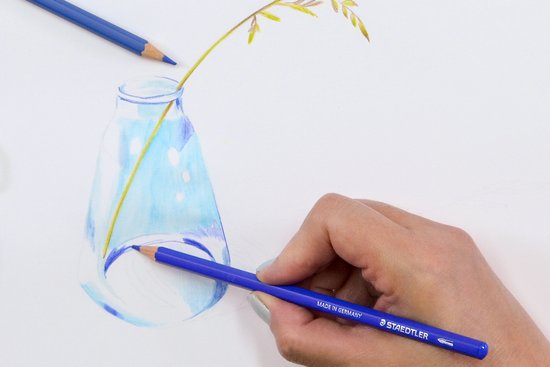
After drying, emphasise the dark shades on the glass with blue coloured pencils.
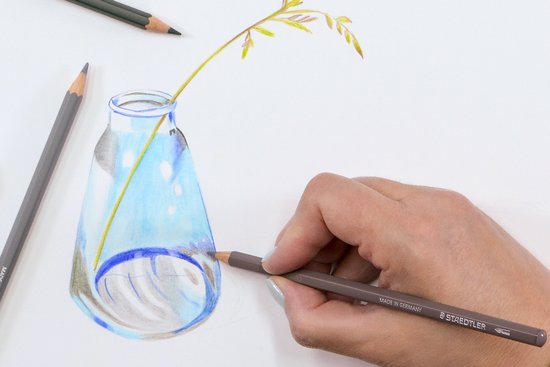
Use light grey tones to create the glass base and then add some shadow areas. Reflections do not have to be copied one-to-one from the real glass, but leave room for your own interpretations.
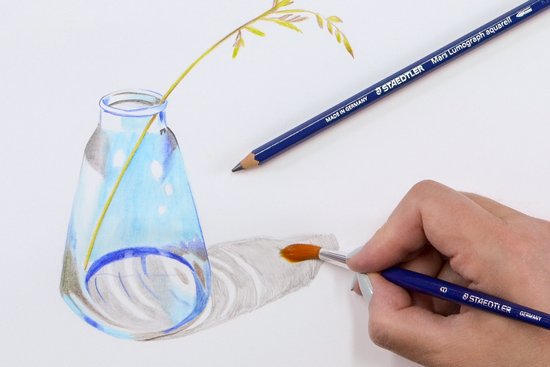
Use the watercolour pencil (size 4B) to create the shadow of the vase. Cut out a few light-coloured semicircles as light reflections. Smudge the pencil surface gently with the brush.
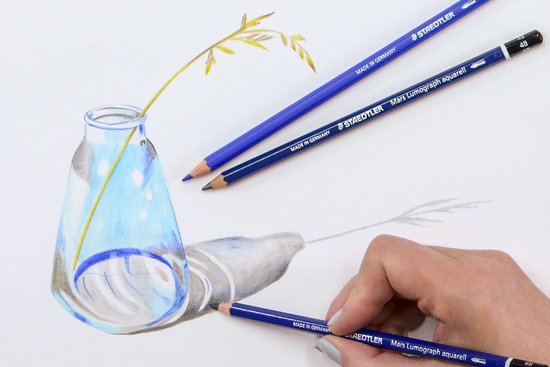
As soon as your picture is dry, colour in some areas in the shadow with dark blue. Use the watercolour pencil (size B8) to further darken the shadow area on the right. Finally, draw the shadow of the blade of grass.
No time right now?
Save this article as PDF!