How do I learn hand lettering with alphabets?
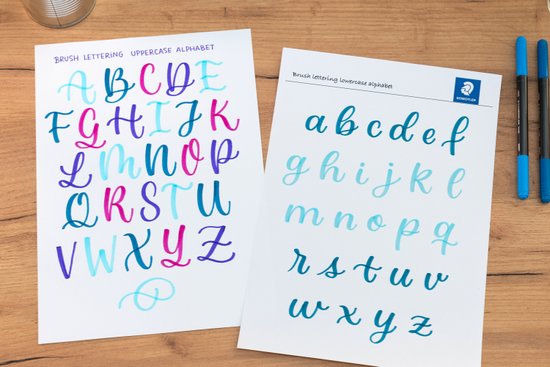
If you want to learn lettering with alphabets, you’ve come to the right place! Because we have the most beautiful styles that give each of your letters a special look.
In our online hand lettering course and our Hand Lettering Creator, you will also find upper- and lower-case letters in various styles, tips on the aesthetic arrangement of words and sentences, as well as decoration ideas. By copying our hand lettering styles, you can practise hand lettering and create new, exciting variations again and again.
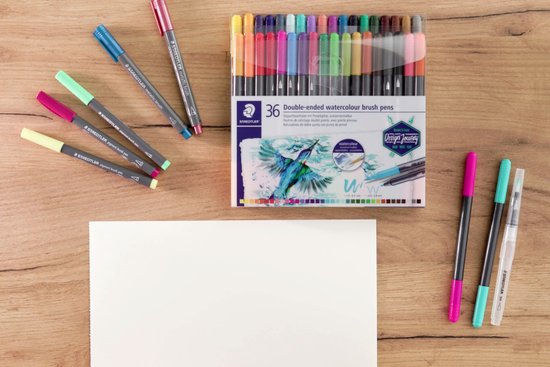
Before getting started, you should choose the right products to successfully implement the different hand lettering techniques and hand lettering fonts. You can also use conventional pens for lettering. For optimum results, however, it is advisable to select your products based on technique and font. You can find the right products and materials on our “Hand lettering products & materials” page.
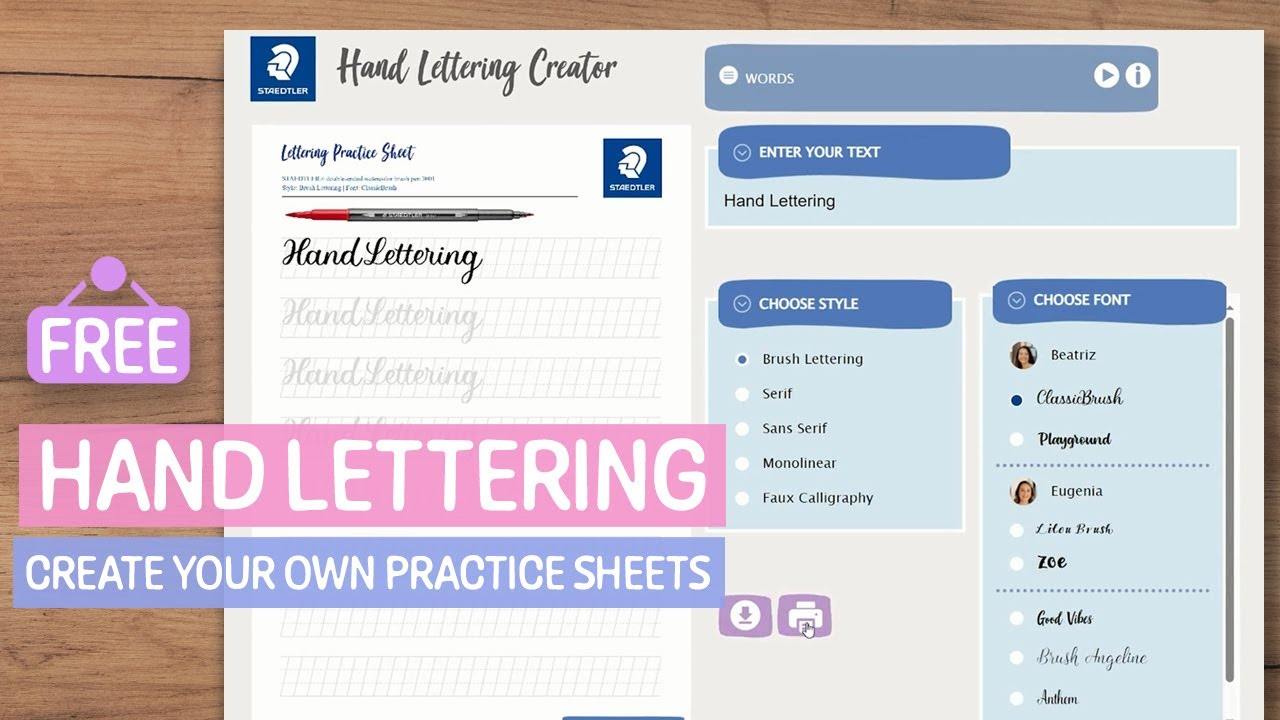
Hand Lettering Creator
► With the Hand Lettering Creator, you can create and print out alphabet templates and various exercise sheets yourself. Get started now with the hand lettering creator to perfect the aesthetics, legibility and flourishes of your letters!
Here in our guide, you can also find out how to connect letters to create whole words, sayings and flowing texts. We will also show you how to arrange several words to create a harmonious composition.
Connect letters to write whole words (in brush lettering style)
In this video, we reveal the best tips for drawing beautifully shaped and original letter connections. We recommend that you have the Alphabets for brush lettering template on hand for this mini course.
We use watercolour brush pens for these exercises as their firmness is ideal for beginners. The rule of thumb is: the larger the tip of the brush, the wider your letters will be. You can draw the grid yourself with a ruler and pencil or use one of our exercise sheets.
In a previous course on hand lettering techniques, we showed you how to write individual letters – also with brush lettering.
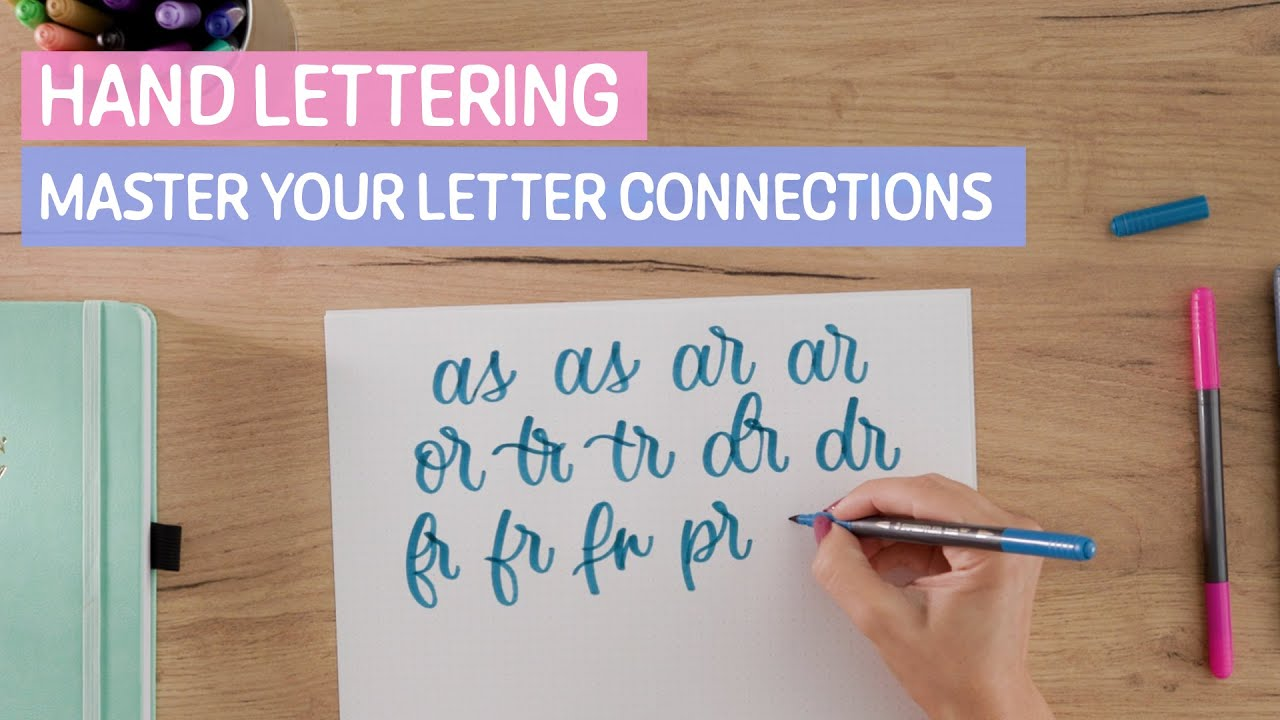
In brush and watercolour lettering, as well as monoline and faux calligraphy, letters are combined to create whole words. However, drawing this connection is not as easy as it seems. After all, the space between the letters should be neither too small nor too large, and ideally no larger than the size of the letters themselves. Sounds complicated, but it’s not. That is... if you know the most important tips and tricks.
Here we go. First you should think about which downstroke the letter comes with and which letter it should be connected to. Each letter combination has its own individual characteristics, which are best explained in the video above. A basic distinction can be made between simple and more complex letter combinations:
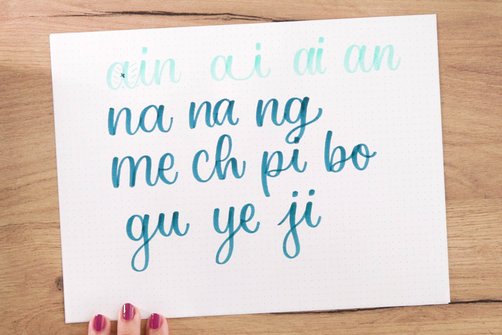
Simple letter combinations
Simple connections can be made between the following letters, for example:
- a-i-n
- n-a-u
- m-e, x-i, c-h, p-u
- b-o, l-e, j-i
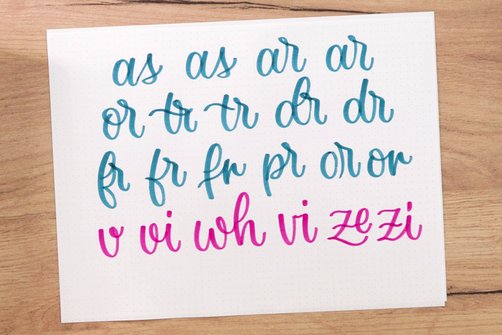
More complex letter combinations
For difficult letter combinations, you can use a variation of the respective letters or leave them unconnected. If the letters are left unconnected, the space between them should be so small that it is obvious that they belong to the same word.
- a-s, o-r, i-s
- t-r, d-r, f-r, p-r
- v/w/x/z
As you can see, you don’t have to connect all the letters together:
- o-r, q-u, g-a
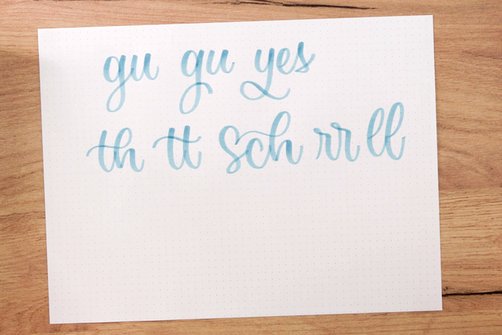
In some cases, you can link letters with perfectly formed connections, also known as “ligatures”:
This applies in particular to th, tt, sch.
You should avoid the following 3 mistakes when combining letters:
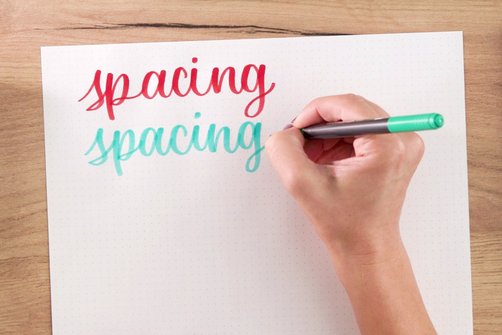
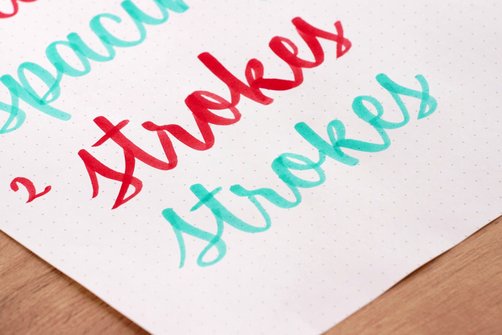
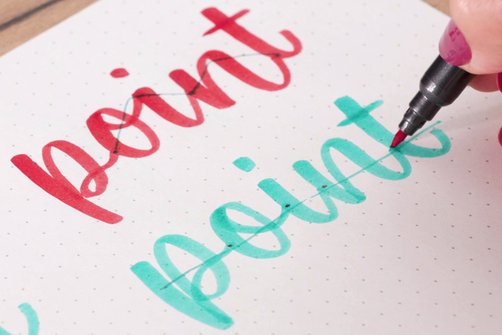
Our tip: Try to perfect your individual letters first before attempting to join them. It is primarily about making the word – as a whole – look aesthetic and harmonious, rather than about writing every letter perfectly.
Practice and learn lettering fonts
Create words and alphabets now for free – with our hand lettering creator.
With these practice sheets, hand lettering becomes child’s play! We have put together numerous exercise sheets for you here. And that was not all: you can type in your desired letters and words in different hand lettering fonts and print them out.
Layout and composition
You have now mastered how to combine different letters. In this next step, you can learn how to arrange several words harmoniously and create compositions – in this video we show you how to do it.
First you should have a pencil, eraser and a ruler on hand to sketch out the composition. To create the final design, we recommend using our brush pens with two tips. You can use normal printing paper for an initial sketch. However, we recommend thick, smooth paper of at least 200 g/m2 for creating your hand lettering artwork, given the selected pen type.
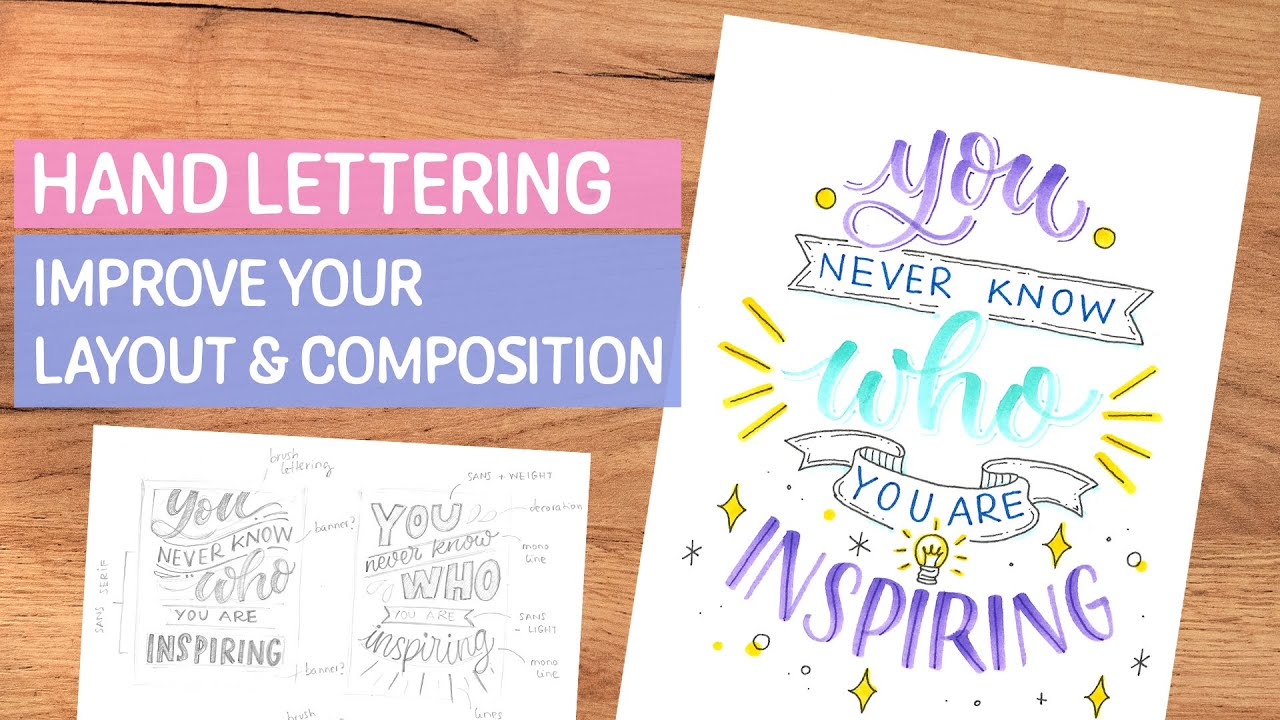
Below we explain step by step how to create perfect compositions:
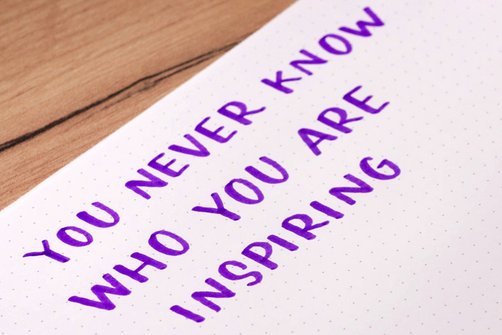
Start by choosing a set of five to ten words so that you have enough space to experiment and embellish them with decorative elements. In the above video, we chose the following sentence: “You never know who you are inspiring”.
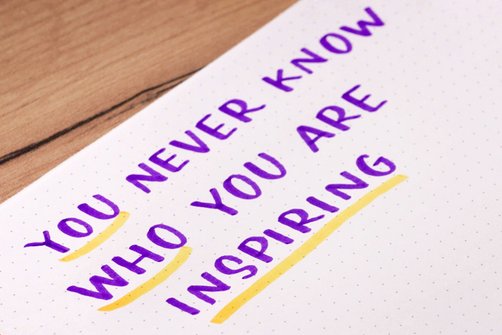
For the next step, underline the words that are most important for conveying your message. This results in a visual hierarchy, as we will emphasise these words in a larger font size, using an eye-catching style, shadows, or decorations. The remaining auxiliary words can be displayed in a simpler font and smaller size.
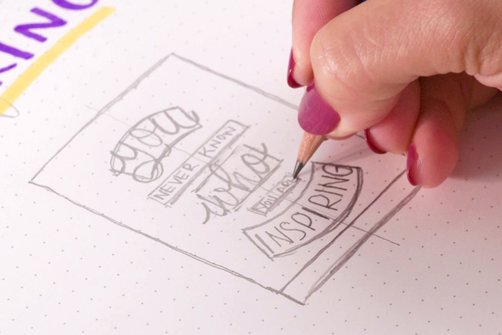
The next step is to make a variety of initial mini sketches of your composition with a pencil on normal paper, about 10 x 10 cm in size. This allows you to try out different styles, font sizes and layouts. It will also help you avoid spending hours working on a hand lettering composition, only to then realise that the composition doesn’t look the way you imagined it. If you’d rather use an existing design, you can download various templates for your layout elements here:
Plus: Experiment with different fonts and styles – serif and monoline, sans serif and brush lettering, etc. This will give your creations an exciting look!
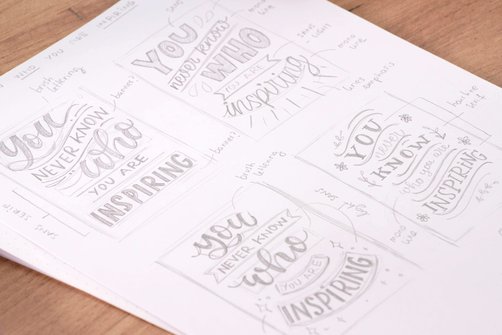
Now select the mini sketches which are best suited for your lettering. You should also consider whether you want to the format of your composition to be square, horizontal, or vertical. Square compositions are suitable for social media or logos. For banners, slogans with long words, or signage, a horizontal format is the best choice. A vertical format of the words is ideal for book covers and posters. We recommend that you first draw a text box in which you arrange the letters.
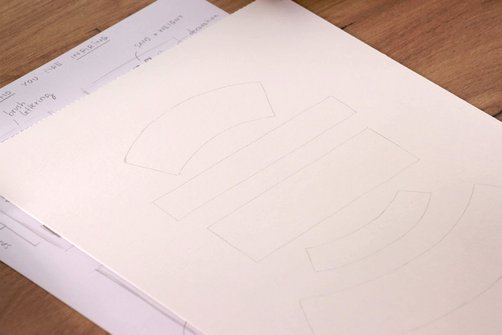
Now we can move on to the final sketch. To do this, you should use the ruler to find the centre of the page and make sure that you include a margin on each side. Then draw the text boxes from your mini sketch onto a fresh piece of paper and leave enough space around the lettered words so that they don’t look crowded.
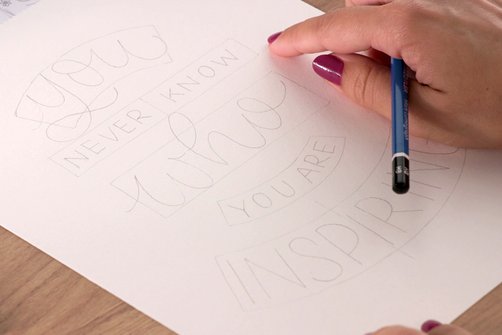
Now draw in the individual words and include decorations, upstrokes and downstrokes. If you draw the letters with a pencil, make sure that they are not too close together. Otherwise, if you trace with a brush pen, you may run out of space.
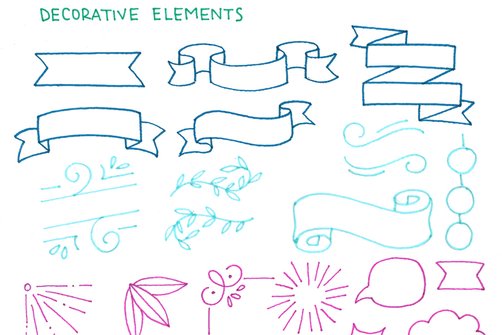
Now you can add decorative elements such as banners, arrows, or other embellishments. These not only give your creation more dynamism, you can also use them to fill in white areas or visually balance out your composition. You can find out more about decorative elements further down this page.
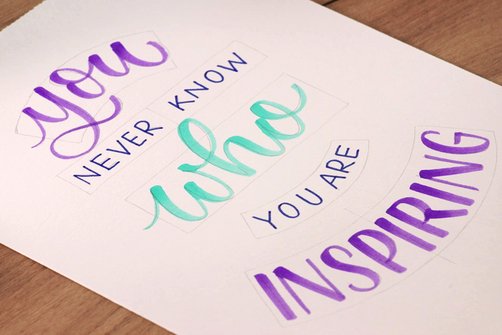
Now you can trace your sketch with your chosen hand lettering pens. When choosing the colours, you should consider matching the colours with the message and design of your hand lettering artwork, for example using bright colours for positive messages.
Take your time when hand lettering and rotate your paper so that it allows you to draw more beautifully shaped lines. Follow the lines of your sketch – you should also try refrain from any spontaneous design changes. To get a better feel for the final look, you can also trace your previous sketch with a hand lettering pen.
Would you like to learn different layouts and compositions using practice templates or be inspired by ready-made hand letterings? ► Then our Hand Lettering Creator is the best choice.
You can then decorate the upper-case letters and lower-case letters to give them that certain something and accentuate a particular style. We show you how to do this in the following video.
Draw decorative elements
In this video, we look at creating decorative elements such as arrows, leaves and floral details. You can draw the embellishments with the thin tip of your double fibre-tip pen so that they match your letters perfectly, or you can use a pigment liner or triplus fineliner.
Hereyou can download an overview of various decorations:
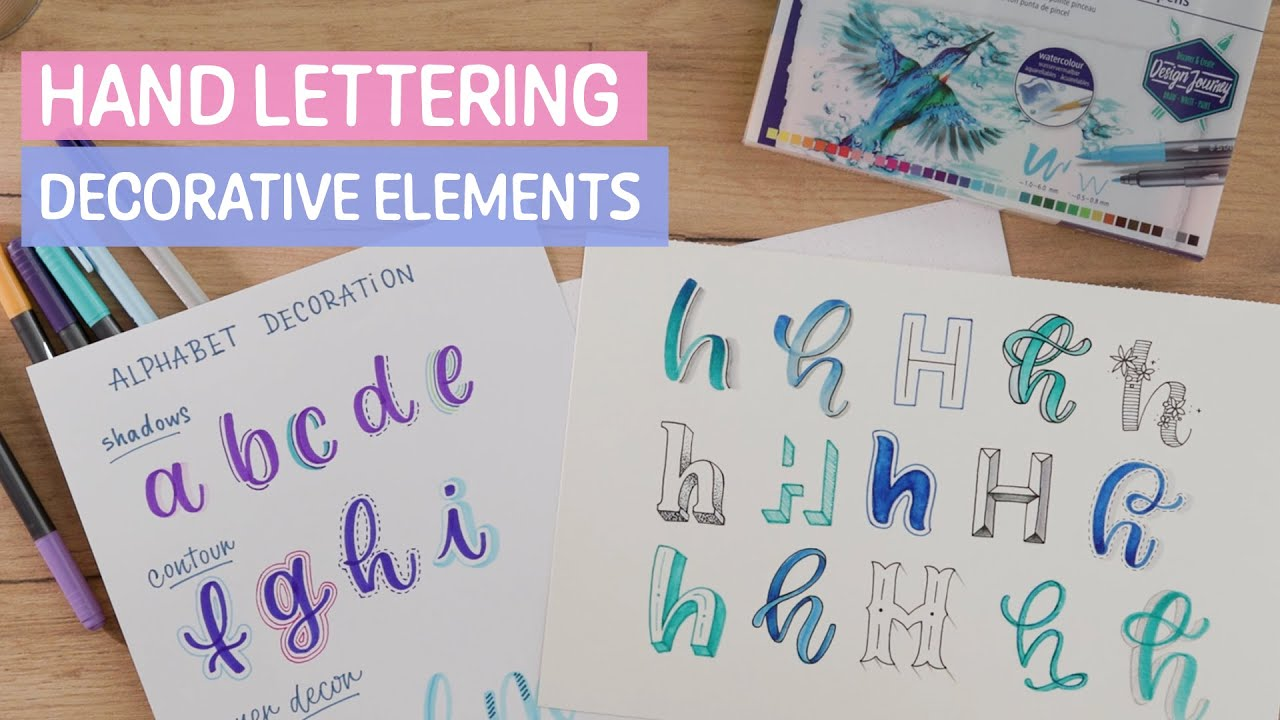
In the previous video, we explained how to create compositions. As you have already noticed, some areas remain white. You can fill these with the help of decorative elements – using, for example, shadows.
You should take this into account:
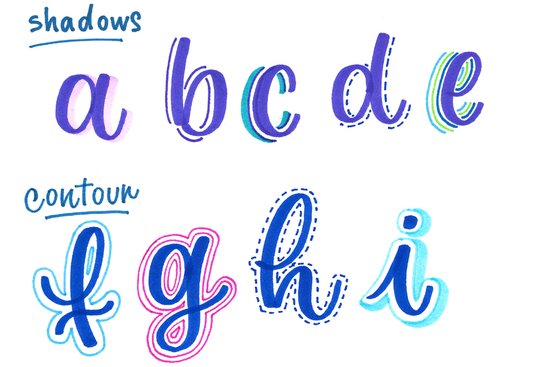
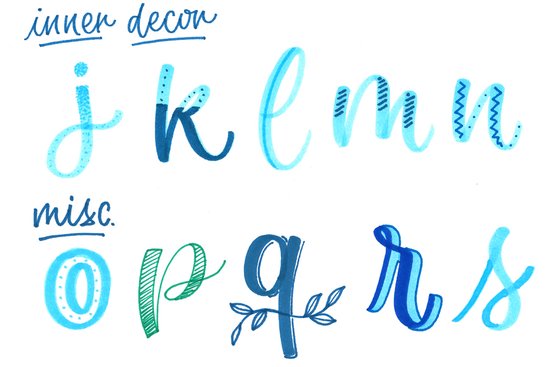
- You should always draw shadows on the same side of the letters to convey that the light hits the letters from the same side.
- Use a lighter colour to draw in the shadows. Otherwise, the words will be hard to read.
- Use darker colours to decorate the inside of the letter. However, wait until the edging is completely dry. For particularly fine lines, you can use a pigment liner.
- Draw dotted or dashed lines to outline letters. You can add shadows to these decorations.
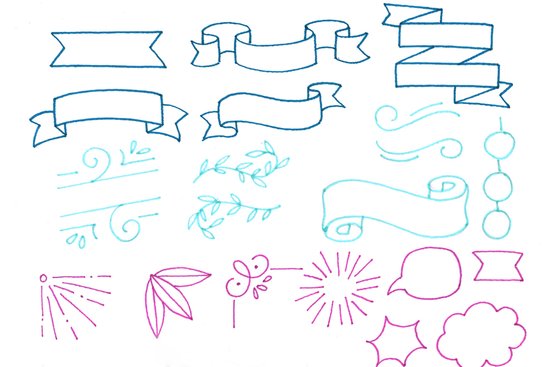
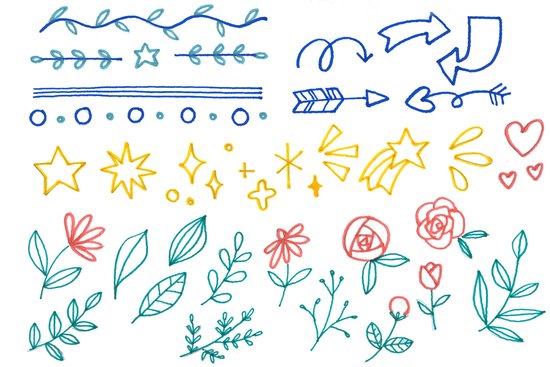
- Now, you can add more elements. However, try not to overdo it. These elements include: Banners, shadows, flowers, drops, arrows, leaves and many more.
- For a finishing touch, you can sketch your decorations with a pencil and trace them with a hand lettering pen. Done! Our tip: Experiment with different ornaments!

The Design Journey Art Class is brought to you by STAEDTLER UK in partnership with Crafty Arts, our online retail partner.
Crafty Arts are a family Arts & Crafts business, offering a wide range of art supplies, as well as tutorials and tips, so you can be creative daily.
Get everything you need for all of the Design Journey Art Classes exclusively through Crafty Arts!
Discover more pages on the topic of hand lettering
Frequently asked questions about hand lettering and fonts
Yes. You don’t need any previous knowledge – just a little patience and the right guidance. You can find these and other tips and inspiration on our main page on “Learning hand lettering”.
Are you still starting out on your hand lettering journey? On our Hand lettering home page, we have compiled ten typical mistakes made by beginners.
Absolutely. Successful hand lettering does not require beautiful handwriting. Practice makes perfect! You can expand and improve your hand lettering repertoire with the help of our practice sheets.
Monoline fonts are very puristic and elegant. Extended monoline fonts in particular radiate a special elegance.